The Lord is My Shepherd

Psalm 23:1-3: “The Lord is my shepherd; I shall not want. He makes me lie down in green pastures. He leads me beside still waters. He restores my soul. He leads me in paths of righteousness for his name’s sake.”

A shepherd is committed to protecting his sheep, nourishing his sheep, and caring for his sheep. When David says the Lord is his shepherd, he is saying that he is trusting the Lord to do all these things for him. David certainly knew his share of hardship; there were many occasions in which David’s very life was in danger. In the midst of all his trials, David learned to put his trust in the Lord, to find his rest in the Lord, and to allow the Lord to guide him.

The result of David doing these things was contentment, rest, peace, restoration, and the paths of righteousness. Sounds good, doesn’t it?

So, in difficult times, why do we resist entrusting ourselves to the Lord? Why do we often want to live as the shepherd and not the sheep? How is that working for us?

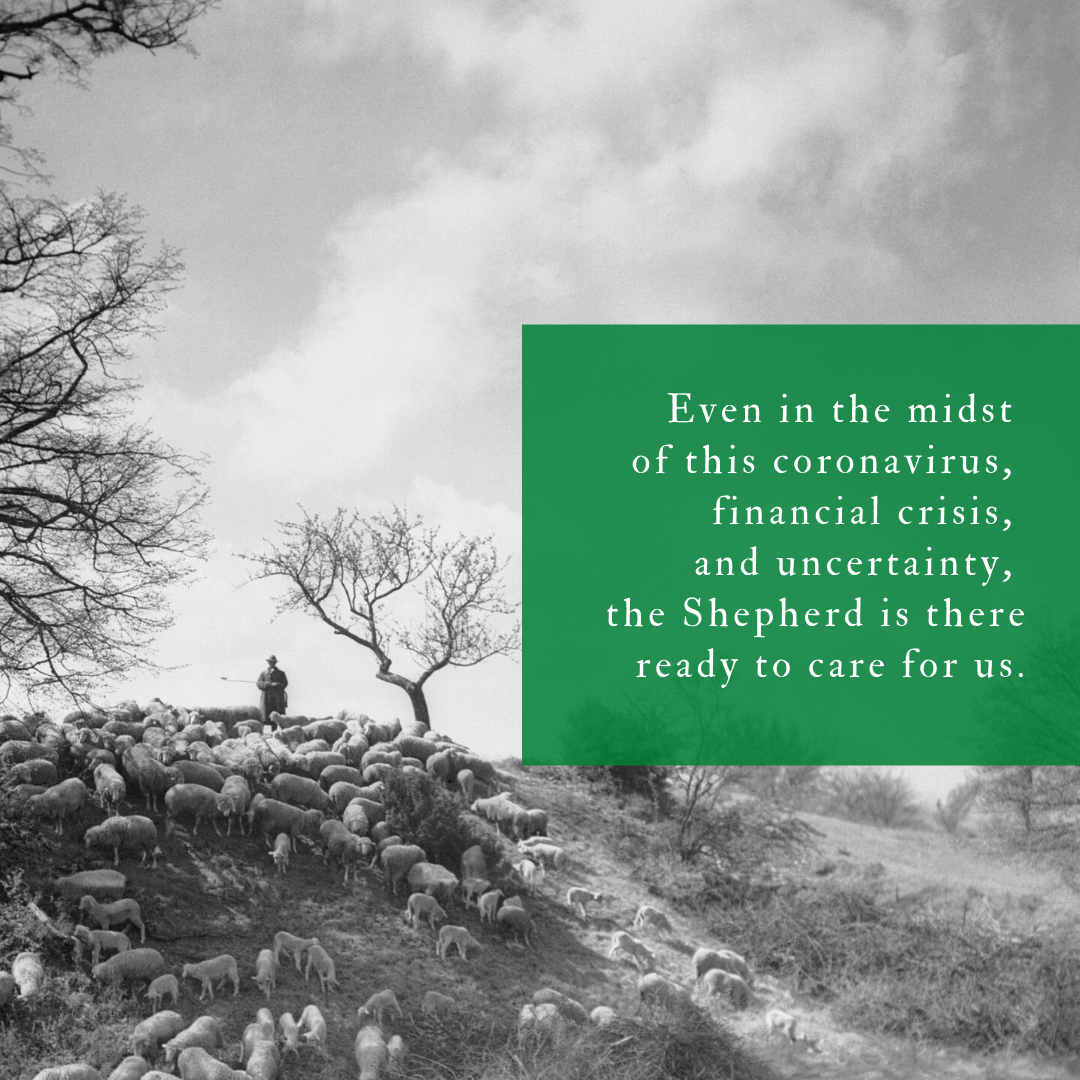
Do you want contentment, rest, peace, restoration, and paths of righteousness? Even in the midst of this coronavirus, financial crisis, and uncertainty, the Shepherd is there ready to care for us. He knows our needs even better than we do. Today, let’s choose to entrust ourselves to him.
God’s Perspective

1 Samuel 16:1: “The Lord said to Samuel, ‘How long will you grieve over Saul, since I have rejected him from being king over Israel? Fill your horn with oil, and go. I will send you to Jesse the Bethlehemite, for I have provided for myself a king among his sons.’”

In our passage today, Saul is still the reigning king of Israel though he has been rejected by the Lord. Saul was given specific orders from the Lord, and Saul chose his way instead of fulfilling the Lord’s commands. It was a small tweak but an important tweak. As God’s anointed king, Saul was to obey the word of the Lord completely. Saul was Israel’s king under the true King, the Lord. Saul’s act of disobedience led to God’s rejection of him as king. For the rest of the kingship, Saul will fervently hold to his crown while knowing that he is no longer God’s chosen instrument.

Meanwhile, God has called the prophet Samuel to anoint a new king. As Samuel views the sons of Jesse, he assumes he can pick God’s chosen man. How wrong he is! God has chosen David, the youngest of the sons and the one working as a shepherd to lead his people. Based on Samuel’s and Jesse’s response, David would not have been their choice for a king. Nevertheless, David was God’s choice.

What does the Lord want us to take from this text? First, God’s commands are to be obeyed wholeheartedly and completely. Second, God works in ways that we cannot begin to fathom. Why would he choose the youngest son and apparently the least likely son? The Lord is the true king, and the true king operates outside of our logic and understanding.  

There are certainly things in the world today that we cannot understand. Why has this coronavirus reeked such havoc among the world? Answers to that question are not yet revealed; however, the most important question we can ask ourselves is — how shall we live in light of this virus? Just as the Lord had a plan for Israel’s king, he has a plan for this virus. While we watch, wait, and pray, can we choose to trust and obey God wholeheartedly and completely?

The Collect for Sunday

“Gracious Father, whose blessed Son Jesus Christ came down from heaven to be the true bread which gives life to the world: Evermore give us this bread, that he may live in us, and we in him; who lives and reigns with you and the Holy Spirit, one God, now and forever. Amen.”

Father, we thank you for the nourishment of our souls and bodies that can only come through your Son, our Savior, Jesus Christ. Strengthen us in him and through him to do the work you have called us to do, especially during these difficult days.

Seen, Known and Loved

John 4:16-18: “Jesus said to her, ‘Go, call your husband, and come here.’ The woman answered him, ‘I have no husband.’ Jesus said to her, ‘You are right in saying I have no husband; for you have had five husbands, and the one you now have is not your husband. What you have said is true.’”

In this conversation with the woman at the well, Jesus shows his compassion and his omniscient knowledge. Jesus chose to speak with this woman knowing who she was and all that she had done. Truth, love, and grace. Jesus speaks the truth in love, offers the woman grace and then tells her about living water.

That is exactly what the Lord does with us. He speaks the truth to us about our sin through the conviction of the Holy Spirit, he offers us grace and reconciliation through his Son, and he fills us with his life-giving living water. Just like the woman at the well, we are seen, known, and loved.

How do you respond to being completely known and completely loved?

Perfect Knowledge and Perfect Love

Romans 5:6-8: “For while we were still weak, at the right time Christ died for the ungodly. For one will scarcely die for a righteous person – though perhaps for a good person one would dare even to die – but God shows his love for us in that while we were still sinners, Christ died for us.”

Through my years in my ministry, I have heard many people speak these words: “If God really knows what I have done, he cannot (or will not) love me.” Romans 5 speaks directly to that lie. Christ knew exactly the sins we would commit. He chose to lay down his life as a perfect sacrifice for those very sins.

Jesus didn’t wait until we got our act together; he didn’t wait for us to repent; he knew our weakness, knew our rebellion, knew the ugliness of our sin. Still, he chose to put his love upon us.

God does know the depth of your sin and depravity. He knows all the ways you have fallen short and all the ways you will continue to fall short. Coinciding with his perfect knowledge is his perfect love.

This Lenten season, will you openly acknowledge your sinfulness before the Lord, and will you acknowledge his love for you in spite of your sin? There is nothing you have ever done that will make him love you more, and there is nothing you will ever do to make him love you less. God loves you! He sent Jesus to reveal that love to you.

Living in Hope

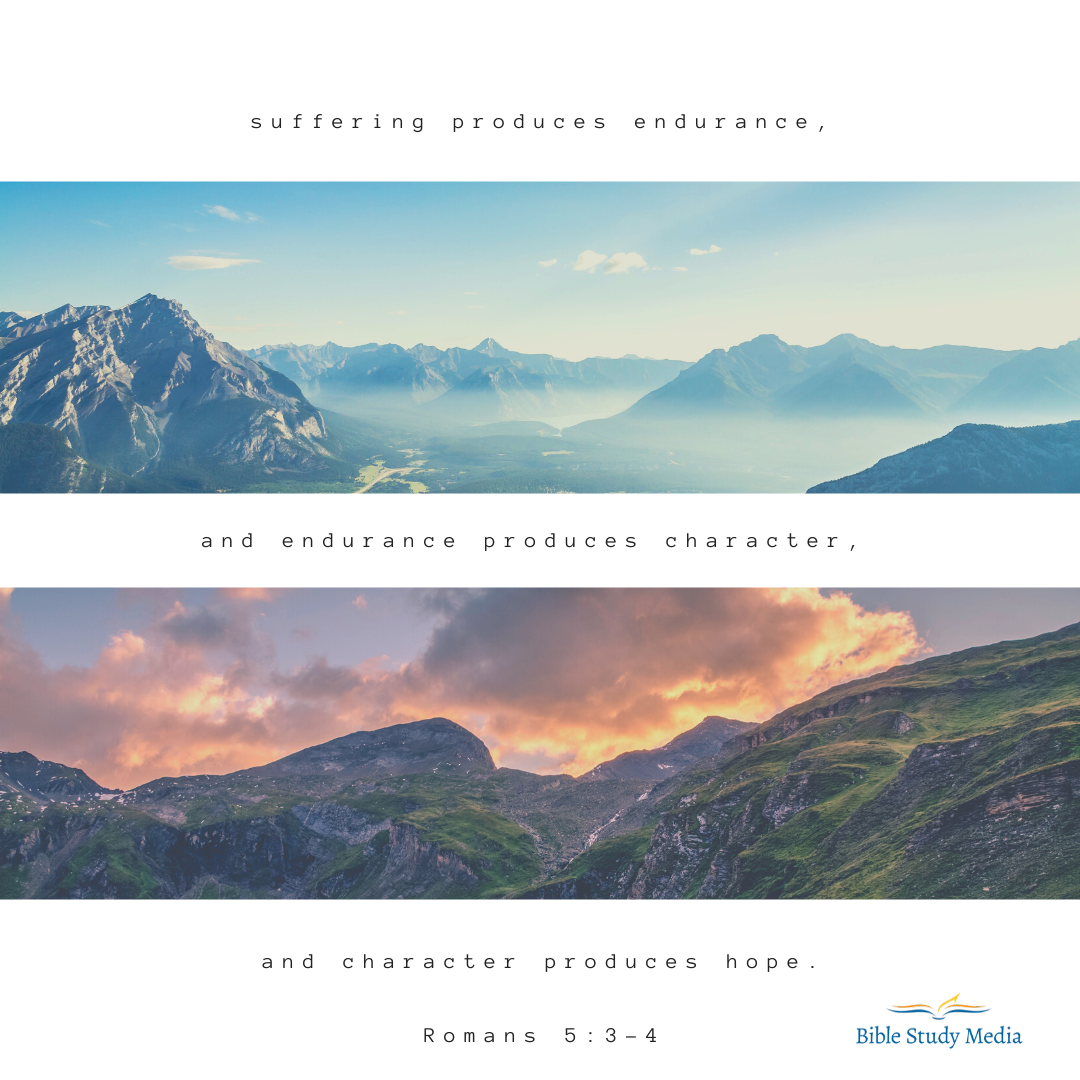
Romans 5:1-5: “Therefore, since we have been justified by faith, we have peace with God through our Lord Jesus Christ. Through him we have also obtained access by faith into this grace in which we stand, and we rejoice in hope of the glory of God. Not only that, but we rejoice in our sufferings, knowing that suffering produces endurance, and endurance produces character, and character produces hope, and hope does not put us to shame, because God’s love has been poured into our hearts through the Holy Spirit who has been given to us.”

Paul exhorts us to remember our hope of glory and to live according to this hope. Our hope is found in the righteousness given to us through Christ. When we put our faith in him, we are justified before the Father. I have heard justification explained this way – “just as if I never sinned.” The righteousness of Christ covers us so that when the Father looks at us, he sees us covered in righteousness. What a gift! We have full access to the Father and an eternal assurance of life with him.

While we are in this world, we will continue to endure suffering. Paul reminds us that suffering produces endurance which leads to character which leads to hope. Our worldly afflictions create a transformation within us so that our lives look more like Jesus.

Are you living in this hope of glory?

Let Us Worship and Bow Down Before the Lord

Psalm 95:6-7: “Oh come, let us worship and bow down, let us kneel before the Lord, our Maker! For he is our God, and we are the sheep of his hand.”

Each day, we get to make a choice as to who or what we will worship. What do you think about more than anything? Where do you spend the most time? What are the greatest sources of your anxiety or fear? What brings you the most joy?

The answers to these questions will quickly reveal what you worship. Throughout Psalm 95, the psalmist reminds us that God alone is worthy of our worship and adoration. He calls us to come wholeheartedly before him, to recognize that all that we have and all that we are come from him. He is our maker!

Who are we? We are his people. As in many other passages of Scripture, we are likened to his sheep. As sheep, we acknowledge that we need the Lord’s guidance, protection and provision.

This Lenten season, let’s allow God to examine our choices of who and what we worship. May we repent of our idols and return wholeheartedly to the Lord. Let’s make the choice to bow before him alone.

Soften Our Hearts

Soften our hearts

Exodus 17:1-2: “From the wilderness of Sin the whole congregation of the Israelites journeyed by stages, as the Lord commanded. They camped at Rephidim, but there was no water for the people to drink. The people quarreled with Moses, and said, ‘Give us water to drink.’ And Moses said to them, ‘Why do you quarrel with me? Why do you test the Lord?’”

In Egypt, the Israelites groaned under oppression. God intervened; he made a way for their escape and then provided water, food, and direction in their travels. Now, we see these people groaning again – “Give us water!”

After seeing God’s faithful provision, we would assume that the people would look to God and ask him to provide for their daily needs. They had seen his miracles. Instead, we see the hardness of their hearts. Instead of trusting, they begin demanding. They get angry with Moses accusing him of bringing them into the wilderness to die.

Hardness of heart is a dangerous thing. Despite seeing the goodness of God through their freedom and provision, the Israelites chose to doubt God and to doubt Moses.

Do we do that? Do we allow our immediate fleshly desires to overrule us so that we begin to doubt God, get angry at God, and allow our hearts to get hard? 

Father, forgive us for the many times we allow our hearts to get hard. Soften our hearts through the power and presence of your Holy Spirit and empower us to trust you to meet our needs.

The Perfect Care of the Lord

The Lord alone can protect us

The Collect: Almighty God, you know that we have no power in ourselves to help ourselves: Keep us both outwardly in our bodies and inwardly in our souls, that we may be defended from all adversities which may happen to the body, and from all evil thoughts which may assault and hurt the soul; through Jesus Christ our Lord, who lives and reigns with you and the Holy Spirit, one God, for ever and ever. Amen.

With all the fear and anxiety plaguing our world today, it is the opportune time to ask the question from the collect — are you entrusting your body and your souls to the Lord? The Lord alone can protect us. May we move out of the fear, anxiety and self-protection and move into the perfect care of the Lord.

My Help Comes From The Lord

Psalm 121:1-2: “I lift up my eyes to the hills. From where does my help come? My help comes from the Lord, who made heaven and earth.”

Psalm 121 is a Psalm of Ascent. These are psalms that the Israelites sang during their journeys to Jerusalem. The hills represent the unknown. As they journeyed, who knew what was upon the hills – wild animals, bandits, etc.?

As Christians, we are all on a journey to our true home. There are many hills in our lives, plenty of unknown. How do we deal with our fear? The psalmist looks to the Lord and recognizes that he alone is the source of help. He recalls that the Lord is the one who made heaven and earth; this is a recognition that all power over heaven and earth is in his hands.

As we journey through this season of Lent, we have the opportunity to allow God to lead us in the transformation of our lives. Part of that transformation comes in considering where we place our trust. There will be plenty of unknown in this world. The Lord, as the one who made the heaven and earth, has all power to meet us in each and every challenge, each and every unknown.

Can we, like the psalmist, cry out to God to provide all the help we need to journey well?